Neighbour's Air-Con Dripping Water Damaged Your Property? Claiming in Hong Kong

EasyDebt Editorial
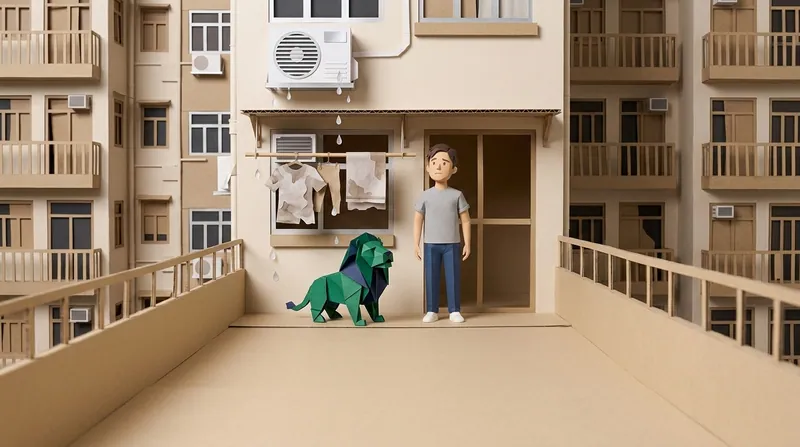
Air-con season means one of the most common complaints in Hong Kong: you look up and the unit on the flat above is dripping — onto your drying laundry at best, or steadily onto your own air-con unit and window sill, and eventually staining the wall, at worst. Most people's first move is to report it to the Food and Environmental Hygiene Department (FEHD). But after reporting, many discover something they didn't expect: the government can fine the owner upstairs — and still not compensate you for a cent of your own loss.
This guide draws on public materials from FEHD, a government press release, the Hong Kong Judiciary and 1823 to explain why upstairs air-con dripping is so common, how FEHD's enforcement differs from your own civil claim, and how to gather evidence and file at the Small Claims Tribunal for your own loss.
Why Does the Upstairs Air-Con Keep Dripping?
An air-conditioner produces condensate water during normal operation, which is meant to drain away through a pipe or a drip tray. Dripping nuisance is common largely because that drain pipe is blocked or was installed at the wrong angle, so the water never follows its intended path and drips straight down instead. How common is this in Hong Kong? According to FEHD's own news release, as of 24 August 2025 the department had cumulatively addressed roughly 5,200 air-conditioning units' dripping problems, a 25% increase on the same period last year — identifying 30 problem hotspots across 14 districts, covering more than 160 buildings and around 7,000 units, alongside a private-property-management assistance programme spanning over 280 estates that handles more than 4,000 cases a year. In other words, what you're dealing with isn't an isolated incident — it's a well-documented, growing problem.
You've Reported It to FEHD — How's the Case Handled?
If you're reporting or about to, you can go through 1823 or contact FEHD directly. When reporting, you'll need to provide the suspected source unit, the pattern of when the dripping occurs, the affected unit, the location and (if available) photos, and state whether you consent to government staff inspecting your own flat.
If the building has a property management company, it's generally worth asking management to help verify the source and contact the relevant resident first, before escalating to the government if that doesn't resolve it. Per the government press release, FEHD ran a pilot "Operation Sunny Day" across six districts from May to October 2024, issuing more than 1,505 nuisance notices — around 1.2 times more than the same period the year before, showing the department has genuinely stepped up enforcement in recent years. Bear in mind, though, that a case takes time to move from report to resolution — it won't be settled immediately.
The Government Can Fine Your Neighbour — But Does That Pay You?
This is the single most important point in this whole article, and the one most people get wrong.
Air-con condensate dripping that causes a nuisance is generally governed, per the government press release, by section 12(1)(g) of the Public Health and Municipal Services Ordinance (Cap. 132), covering nuisance caused by waste water discharged from a ventilation system, including an air-conditioner. FEHD takes a progressive enforcement approach: an oral warning or advisory letter first, then a nuisance notice requiring correction within a set period, and if the owner still doesn't comply, prosecution — with a maximum fine of Level 3 (HK$10,000) plus a continuing daily fine of HK$200. In serious cases where the owner keeps ignoring it, the court can issue a nuisance order, and breaching it carries a maximum fine of Level 4 (HK$25,000) plus a continuing daily fine of HK$450.
Those numbers look substantial, but every dollar of them goes to the government, not to you. Nowhere in the press release is there any mention of a compensation mechanism for the affected resident — meaning even if FEHD successfully prosecutes the owner upstairs, your ruined laundry, damaged air-con unit or stained wall doesn't automatically get resolved by that enforcement action. To recover that money, you need a completely separate route: a civil claim — filing at the Small Claims Tribunal against the responsible party for your own actual loss.
Building a Strong Case: What Evidence Actually Matters?
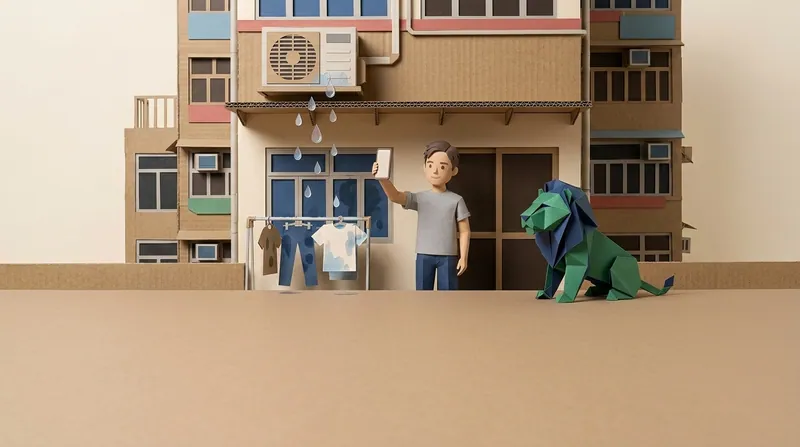
To recover your own loss from the owner upstairs, start gathering evidence from the moment it happens — evidence collected after the fact is much weaker:
- Photograph or film it the moment it's dripping, ideally with the time and date recorded, to prove the dripping actually happened and how long it lasted
- Note the suspected source unit (floor and unit number), and the pattern of when it tends to occur
- Keep proof of your loss — photos of ruined laundry, a damaged air-con unit or other damaged items, and repair quotes or replacement receipts
- Keep your FEHD complaint reference number — even though government enforcement won't compensate you, a nuisance notice or fine record that's already been issued is itself strong supporting evidence that the source really is that unit, which helps considerably with your later civil claim
For more on how to assemble a full evidence package and present it at a hearing, see our complete guide to preparing evidence.
From a Polite Word to Filing a Claim: The Practical Steps
Realistically, you don't need to rush straight to filing. A more practical sequence looks like this:
- Talk to the owner upstairs directly, or leave a message through the building's management office — often they simply don't know their air-con has a problem, and will get it fixed once alerted
- If there's no response, or it's been "fixed" but the problem persists, report it to FEHD at the same time — let the government investigation run while you keep gathering your own evidence; the two tracks can run in parallel, so you don't have to wait for FEHD's result before doing anything else
- Once your loss is clear (laundry already ruined, a wall already visibly stained) and the other side still hasn't taken real action, gather your evidence together and pursue the responsible party
This scenario is different from an internal plumbing leak — if it's a burst or leaking pipe inside a unit, see our complete guide to water-damage claims; if the leak source involves common parts of the building (e.g. the rooftop or shared pipework), the party you claim against is different too — see claiming for common-area pipe leakage from your Owners' Corporation.
Claiming at the Small Claims Tribunal: Procedure and Amount
Per the Hong Kong Judiciary, the Small Claims Tribunal handles claims not exceeding HK$75,000, covering debts, service fees, property damage, sold goods and consumer claims — your ruined laundry, damaged air-con unit or wall damage all fall under property damage. Note that the Tribunal does not hear labour disputes, claims to recover possession of land, maintenance claims or defamation cases — if your case falls into one of those categories, you'll need a different route.
If your claim exceeds HK$75,000, the Tribunal has no jurisdiction and you'll need to consider the District Court or another route instead. Before filing, make sure you've verified the correct name and address of the defendant (the owner upstairs) — if the claim documents can't be served, the Tribunal cannot take your case any further. For help completing the claim form, see our guide to writing a Small Claims Tribunal claim form; if you'd like someone to walk you through the whole process, find out how our filing assistance service can help.

For more on how similar cases are handled, see our water-leakage case examples. And if you want the full picture before you start, read our complete guide to the Small Claims Tribunal to understand the whole process, timeline and cost.
Frequently Asked Questions
No. FEHD's fines, nuisance notices and court nuisance orders are all enforcement actions — the fines go to the government, not to you as compensation. To recover your own actual loss (laundry, air-con unit, wall damage, etc.), you need a separate civil claim, such as filing at the Small Claims Tribunal.
No. Government enforcement and a civil claim are two independent tracks that can run in parallel. You can let FEHD's investigation continue while you gather your own evidence, and once your evidence is strong enough, you can pursue the responsible party directly without waiting for the government side to conclude.
Yes, though it becomes harder. You'd need to rely on other evidence — the pattern of when the dripping occurs, the position of the air-con unit upstairs, neighbours' accounts — to establish the likely source. The Small Claims Tribunal applies the civil standard of "balance of probabilities," not proof beyond doubt, but a clear chain of evidence is still what persuades an adjudicator.
EasyDebt is not a law firm. This article is for general procedural information only and does not constitute legal advice. Individual cases are governed by Hong Kong law and the Tribunal's own rulings.
Further Reading
This article is for general reference only and does not constitute legal advice. We are not a law firm; please evaluate your individual case based on specific circumstances.