Laundry or Dry Cleaner Damaged, Shrank, or Lost Your Clothes? Claiming in Hong Kong

EasyDebt Editorial
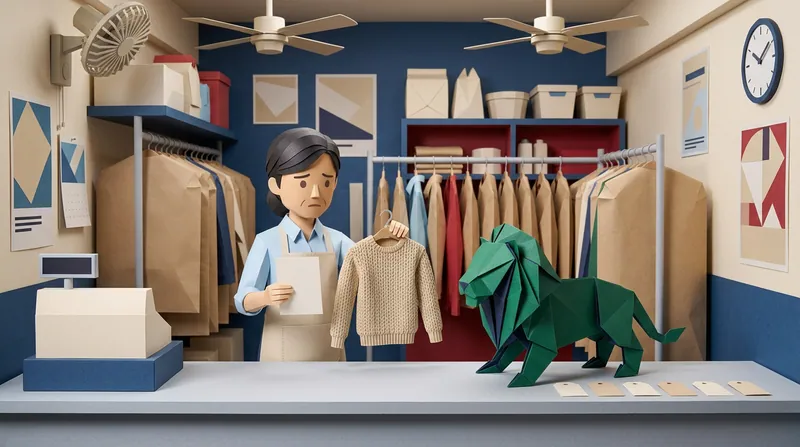
A sweater comes back from the dry cleaner a size smaller. A pair of trousers dropped off at the laundry never comes back at all — staff eventually admit they "can't find it." A leather jacket's fur collar comes back looking nothing like it did before. The amount involved may not be huge, but the feeling of having no way to prove what happened, or push the shop to actually pay, is one a lot of people know well.
The good news is that the moment a laundry or dry cleaner accepts your clothing, it takes on a legal duty to handle and safeguard it properly — a disclaimer printed on the back of the ticket doesn't automatically end the conversation. This article works through that legal ground, whether an exemption clause on the ticket really holds up, what evidence to gather (especially at a self-service locker), how to value the claim, and how to pursue it through the Small Claims Tribunal — drawn from public information from the Community Legal Information Centre (CLIC) and the Consumer Council.
How Common Is This Kind of Dispute
Is this actually a common problem?
More than you'd think. The Consumer Council received 322 complaints about laundry services in 2012, up 6% from 305 in 2011 (Consumer Council, CHOICE Magazine issue 436). One documented case: a customer's HK$3,000 leather jacket remained stained after four separate cleaning attempts; after mediation the shop agreed to pay HK$900 in compensation. The same report describes another case where a customer brought a new shirt and undershirt to a traditional laundry shop; after about a month the shop said both items were lost. The customer's receipts valued the items at HK$2,253 and HK$1,354, and after Consumer Council intervention the shop verbally agreed to compensate.
More recently, a Consumer Council article from January 2022 (CHOICE Magazine issue 543) describes a case where a leather jacket's fur collar shrank and changed appearance after dry cleaning; the shop attempted a repair, but the customer considered the garment's appearance permanently altered. What these cases share is a common thread: the dispute isn't about a subjective judgment of cleaning quality — it's about a concrete, measurable loss or defect.
Does a "Not Responsible" Clause on the Ticket End the Matter?
Is a block of small print on the back of a laundry ticket automatically binding?
Not necessarily. CLIC's own worked example on this exact scenario is clear: "the law requires the service provider (the dry cleaner) to handle the customer's property with care." Even if the shop has posted a notice saying "customers bear all risk for items submitted for cleaning," that notice does not shield the shop if it genuinely damaged the item — "the notice cannot serve an exemption function; an exemption clause must be reasonable to be effective" (CLIC case illustration).
This principle has statutory backing. Under the Supply of Services (Implied Terms) Ordinance, a service provider must perform the service with reasonable care and skill; and section 8(1) provides that, against a party dealing as a consumer, the service provider may not rely on any contract term to exclude or restrict its liability under the Ordinance (CLIC's summary of the Ordinance). In other words, a laundry shop cannot fully escape liability for its own negligence just by printing "not responsible" on the ticket.
As for the more common clause that limits (rather than fully excludes) liability — such as "compensation capped at a multiple of the cleaning fee" — that has to pass the reasonableness test under the Control of Exemption Clauses Ordinance (Cap. 71), section 3(1) and Schedule 2: courts weigh factors like the parties' relative bargaining power, whether the customer had real notice of the term, and whether an alternative without the term was available (CLIC's summary). The reasoning mirrors this site's guide to product warranty refusals, where small print on a warranty card isn't automatically valid either — the merchant has to show the term is reasonable.
Self-Service Lockers Need Even Better Evidence
How is a self-service drop-off different from handing items to staff?
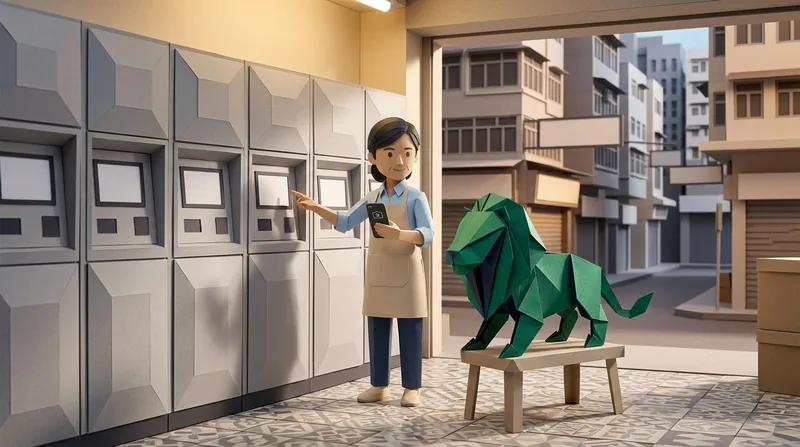
Significantly. A traditional counter drop-off has staff confirming the item's condition and writing up a ticket. An electronic self-service locker has no one to confirm condition at drop-off, so if a dispute arises later, it becomes your word against the shop's. The Consumer Council's 2022 article describes exactly this: a customer recovered partial compensation for a locker-based loss largely because they had kept the receipt (Consumer Council, issue 543). A more detailed case reported by am730, also Consumer Council-mediated, describes a customer who deposited items worth over HK$3,000 combined into a self-service locker; after roughly 10 days with no collection notice, and further delay, the shop said the items were lost — it took about four months and repeated Consumer Council intervention before the shop issued a compensation cheque (am730).
So if you use a self-service locker, do these three things:
- Photograph at drop-off: capture the locker screen and locker number, plus the condition of the item itself (any existing stains or wear).
- Keep your receipt and transaction record: the Consumer Council's own advice is to "photograph the item and the locker screen/receipt" and note the drop-off time and locker number (Consumer Council self-service laundry tips) — with no staff member present to confirm condition, this record is your only objective proof later.
- Think twice for valuable or sentimental items: a channel with no human verification carries proportionally higher risk for anything expensive or irreplaceable.
How Should You Value the Claim
If an item is damaged or lost, how do you calculate the claim?
Similar to the approach in this site's guide to electronics repair shop liability:
- Item lost: value it at the replacement cost for an equivalent item of the same age and condition — not the full original price, but a reasonable deduction for wear. CLIC's analogous worked example, about a repair shop losing a customer's camera, makes the principle clear: the shop is liable to compensate, and if it cannot, it must provide a replacement, with the actual amount of loss (harder to calculate precisely) often needing negotiation between the parties (CLIC case illustration) — the same logic applies to clothing.
- Item damaged, shrunk, or discoloured: value it at the cost of repair or restoration; where the damage is irreversible (leather deformation, a shrunken collar), value it at a reasonable, age-adjusted proportion of the item's worth.
Either way, keeping the original purchase receipt (proving the item, purchase date, and price) makes your claimed amount far more persuasive. For smaller amounts, a formal demand letter setting out the facts, the amount, and a deadline is often enough to get a serious response.
Using the Small Claims Tribunal
The shop won't pay — what next?
If the amount is HK$75,000 or less, you can pursue it through the Small Claims Tribunal. Filing fees run from HK$20 to HK$120, and the process is designed to be simple, without legal representation. Before filing, get your laundry receipt, purchase receipt, drop-off photos, and correspondence organised as evidence — it makes filling in the claim form far more straightforward. If you'd rather not navigate the forms and process alone, our service-dispute filing assistance page sets out what that actually covers.
We've handled a similar service-fee recovery case before — in this fully-recovered service fee case, the client's success came down to well-kept invoices and written correspondence that left the other side with no room to argue in the hearing. The same principle applies to claiming against a laundry shop: how well you document your case is usually what decides the outcome.
What Other Channels Can Help Before You File
Before heading to the Tribunal, there are two free channels worth trying:
- The Consumer Council: can offer advice and mediate laundry disputes. Every case described above was resolved through Consumer Council mediation — it isn't legally binding and can't be enforced if the other side ignores it, but it's free and low-effort, worth trying before you file.
- Small Claims Tribunal Advisory Centre (1/F, Block B, West Kowloon Law Courts Building): provides form samples and procedural help — staff won't give legal advice, but can help confirm your paperwork is complete.
Neither channel affects your right to file later; even if mediation fails, you can still proceed through the Tribunal.
Frequently Asked Questions
Ask the shop to specify exactly what kind of fabric issue and what evidence supports that (such as a professional inspection report), and provide your purchase receipt and any pre-cleaning photos for comparison. Without objective evidence from the shop, a bare claim of a "fabric issue" shouldn't be the end of the matter.
It makes valuation harder, but it's not hopeless — credit card statements, online order records, or market prices for a comparable item can all help support your claimed amount.
Weigh the filing fee (from HK$20) against the time involved. For a genuinely small amount, try a formal letter to the shop first, or Consumer Council mediation — that's often enough without going all the way to filing.
If the shop has closed but the owner can still be traced (for example, operating under another branch or as an individual), the legal basis for your claim is unchanged, though enforcement becomes considerably harder in practice. Start by confirming the shop's business registration status and the owner's details before deciding your next step.
EasyDebt is not a law firm. This article is for general procedural reference only and does not constitute legal advice. Individual cases are subject to Hong Kong law and the Tribunal's decisions.
Further Reading
This article is for general reference only and does not constitute legal advice. We are not a law firm; please evaluate your individual case based on specific circumstances.