Beauty Salon Closed With Your Prepaid Package? How to Try to Recover Your Money in Hong Kong

EasyDebt Editorial
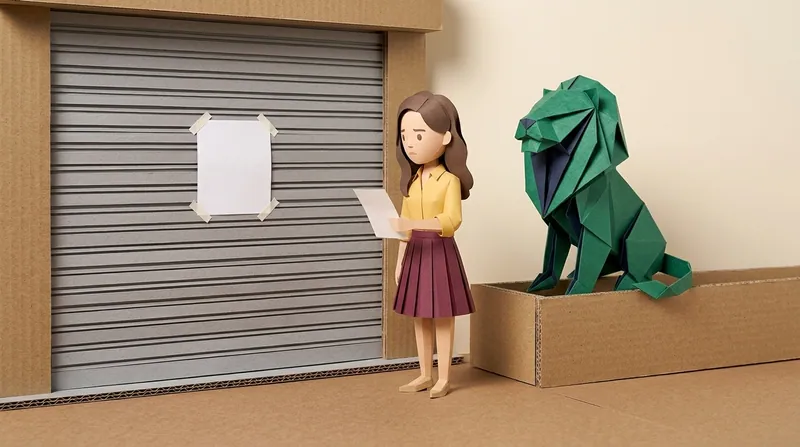
Your phone buzzes with the news that your beauty salon's branch has closed, and sitting in your account is a package you signed up for six months ago with half its sessions never used. That sinking feeling isn't rare — beauty salons and gyms quietly shutting down, sometimes overnight, has become one of the recurring complaint categories the Consumer Council deals with year after year in Hong Kong. This guide lays out, honestly, which routes you actually have left, which ones are worth your time, which ones mostly aren't, and why "just sue the owner" is rarely as simple as it sounds.
This Happens More Often Than You'd Think
Start with the scale of the problem. According to a written reply the Hong Kong government gave the Legislative Council, a single 2024 closure of a large beauty and fitness chain generated 3,861 related complaints to the Consumer Council, involving a total of close to HK$130 million, averaging about HK$33,000 per case, with the highest single complaint reaching roughly HK$1.81 million. The government subsequently set up a cross-departmental task force and began studying several consumer-protection proposals, including a statutory cooling-off period.
This is far from an isolated extreme case. In fact, the Consumer Council itself publishes a dedicated guide on exactly what a consumer should do once a beauty salon shuts down — a sign of how often this specific scenario comes up. If your situation is a salon that's still trading but simply refusing a refund, rather than a closure, see Gym or Beauty Salon Refused Your Refund? If you want to know whether a legal cooling-off period could let you back out of a contract you regret, see No Legal Cooling-Off Period for Beauty Salons? This article deals specifically with a business that has closed, or is about to.
Lump-Sum Credit Card Chargeback: Your Best First Move
If you paid the full package price by credit card (or debit card) in one lump sum, your first move should be contacting your card issuer as soon as possible to apply for a "chargeback." Per the Consumer Council's own guidance, the issuer will then pursue the unused prepaid portion from the merchant's acquiring bank on your behalf.
The biggest advantage of this route is that it doesn't depend on the business still trading — even if the salon has already shut its doors, you can still pursue recovery through the mechanism between your card issuer and the acquiring bank, without needing to deal with a business that's effectively vanished. That said, success depends heavily on your individual card issuer's chargeback terms and lookback period; if too much time has passed since your purchase, you may no longer qualify. The rule of thumb is simple: the sooner you find out and apply, the better your odds.
Paid by Instalment? Your Situation Is Completely Different
If you didn't pay in one lump sum but instead used a credit card instalment plan to cover the package, your situation is considerably more complicated. The Consumer Council notes that this kind of arrangement "functions like a loan and is bound by its own contract terms" — in other words, you have a separate repayment agreement with your card issuer that is legally distinct from your service contract with the salon. Even if the salon has already closed, you generally still need to keep repaying the instalments as scheduled, and card issuers typically won't process a chargeback on that basis.
This distinction is easy to overlook but has real consequences: even if you win a refund or a Small Claims Tribunal judgment against the salon, that does not automatically cancel your repayment obligation to the bank, because the bank was never a party to your dispute with the salon. If you're not sure whether you originally signed up for a lump-sum payment or an instalment loan, start by checking your statement for the issuing bank's name and how the merchant is listed.
If the Business Has Liquidated, What Are You Now
If the salon hasn't just closed but has entered formal liquidation — whether voluntary or by court order — a provisional liquidator takes over the company's affairs. The Consumer Council's guidance recommends that affected consumers watch for official notices and follow the liquidator's instructions to register as an unsecured creditor.
This next part needs to be said plainly: unsecured creditors sit low in the priority order during liquidation. When a company's assets are distributed, liquidation costs and preferential claims (such as unpaid wages) are paid first; by the time unsecured creditors are reached, there is often very little left. Registering as an unsecured creditor is a procedural step worth taking, but you shouldn't assume it will get your money back — and you certainly shouldn't assume you'll recover the full amount.
Is It Still Worth Filing at the Tribunal? Two Kinds of "Closed"
This is where people most often get confused, and the distinction matters a great deal.
Scenario one: the business has stopped trading, but has not yet formally entered liquidation. In this case, you can still file a claim as normal at the Small Claims Tribunal for HK$75,000 or below. Even if the business has no assets to pursue right now, obtaining a judgment still has practical value — the judgment remains legally valid, and it may matter later if the business (or its owner) resurfaces with new assets, or if you need that judgment to support a further course of action.
Scenario two: a court has already issued a winding-up order, or a provisional liquidator has already been appointed. This is a completely different situation — you cannot simply file a claim on your own. Per an explainer published by the Law Society of Hong Kong's own journal, once a winding-up order has been made or a provisional liquidator appointed, anyone wishing to commence or continue legal proceedings against that company must first obtain the leave of the court — via a summons application within the winding-up proceedings — and the court decides based on whether doing so would be fair and right in the circumstances. In other words, simply submitting Small Claims Tribunal forms may not be possible at this stage until the leave question is resolved first.
Even where the legal route remains open, the Small Claims Tribunal's own guidance reminds claimants to think ahead about whether they can actually get their money back — noting that "if the defendant is financially unsound, e.g. unemployed, bankrupt or in liquidation, you may not be able to get your money back," even after winning. So before spending time and a filing fee of anywhere from HK$20 to HK$120, it's worth first finding out exactly what stage the business is at, and whether it actually has any assets left.
Can You Go After the Owner Personally
Many consumers, on hearing that a company has closed or liquidated, immediately think: "then let's go after the owner personally." That instinct is understandable, but it doesn't hold up legally — a limited company and its owner (director) are two separate legal persons. A debt owed by the company does not, in principle, automatically become the director's personal responsibility, and the mere fact that the company has closed or can't pay its debts is not, on its own, enough to make the director personally liable.
Per director liability principles compiled by the Law Society of Hong Kong's own journal, a director can only become personally liable for a company's debts in a fairly narrow set of circumstances:
- Fraudulent trading — meaning there is actual evidence the director personally ran the business with intent to defraud creditors, not merely that the business failed through poor judgment;
- A personal guarantee the director signed — for example, personally guaranteeing a lease or supplier contract in addition to signing as a company representative;
- A specific breach of director's duty — for example, knowingly making an improper preferential payment to a connected party while the company was already insolvent, or disposing of company assets for less than their real value.
Each of these requires concrete supporting evidence — the simple fact that "the company has closed" is not enough on its own. So rather than assuming from the outset that you can skip the company and go straight after the owner, it's more productive to first work through the credit card chargeback route, register as an unsecured creditor if relevant, and assess whether a Tribunal claim is actually feasible.
What to Do Now: A Step-by-Step Checklist
- Check how you paid. Lump sum or instalment loan? This determines whether the chargeback route is even available to you.
- Contact your card issuer promptly. The sooner you ask about the chargeback deadline, the better your chances.
- Watch for the business's official notices. Has it formally entered liquidation, or has it simply paused trading?
- If it has liquidated, contact the provisional liquidator. Register as an unsecured creditor as instructed, but be mentally prepared that you may only recover part of the amount — or none of it.
- Assess whether filing at the Tribunal is feasible. If the business hasn't formally liquidated, you can file directly; if a winding-up order or provisional liquidator is already in place, you'll need to understand the leave requirement first — filing forms directly may not be possible.
- Keep every piece of evidence. The contract, receipts, WhatsApp messages, and screenshots of the business's own closure notice will all matter later, whether for registering a claim or filing at the Tribunal.
- Don't assume the owner is personally liable. Unless there's concrete evidence of fraud, a personal guarantee, or a specific breach of director's duty, this route generally doesn't work.
If, after working through the steps above, you conclude that filing at the Tribunal is a viable option but would rather not research the forms and procedure yourself, see what our filing assistance service covers and how fees are calculated; you can also see how we approach beauty salon dispute cases for a sense of how similar disputes are typically handled.
Frequently Asked Questions
Not necessarily, but you need to act quickly. If you paid by credit card in one lump sum, you can apply to your card issuer for a chargeback to recover the unused portion; this generally doesn't apply if you paid by instalment. If the business has liquidated, you can register as an unsecured creditor, but you should expect a low priority and possibly only a partial recovery.
No. Success depends on your individual card issuer's chargeback terms and lookback period — the longer since your purchase, the lower your chances. Contact your card issuer as soon as you learn the business has closed.
It depends what stage the business is at. If it has only stopped trading and hasn't formally liquidated, you can generally file as normal. If a winding-up order has already been made or a provisional liquidator appointed, you'll first need the court's leave before you can commence or continue proceedings against the company — you may not be able to simply submit the forms directly.
Generally, no. A limited company and its director are separate legal persons, and the mere fact that the company has closed or can't pay its debts is not enough to make the director personally liable. Personal liability generally requires fraudulent trading, a personal guarantee the director signed, or a specific breach of director's duty, such as an improper preferential payment.
You can consider lodging a complaint with the Consumer Council, which can help clarify the business's closure arrangements and refer suspected Trade Descriptions Ordinance breaches to Customs. If you do decide to file, a formal demand letter setting out your reasons is sometimes enough on its own to prompt a faster response from the business or its liquidator.
EasyDebt is not a law firm. This article is for general procedural information only and does not constitute legal advice. Individual cases are subject to Hong Kong law and the Tribunal's rulings.
Further Reading
This article is for general reference only and does not constitute legal advice. We are not a law firm; please evaluate your individual case based on specific circumstances.