Electronics Store Took Your Deposit and Never Delivered? In-Store Purchase Disputes in Hong Kong

EasyDebt Editorial
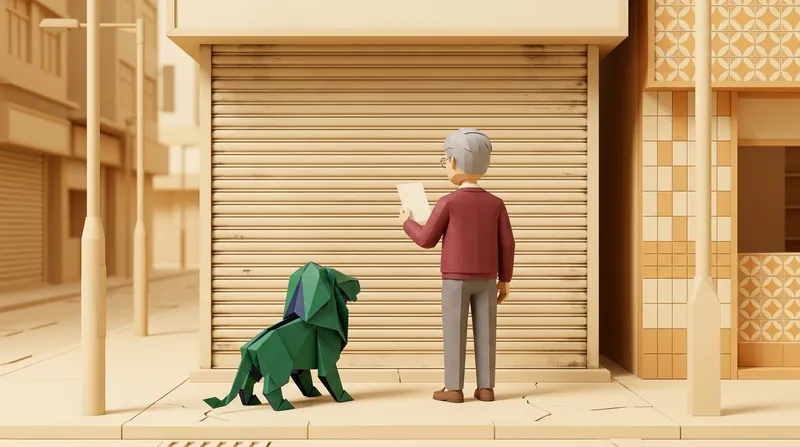
You paid a deposit at an electronics or furniture store and waited weeks, sometimes months, for delivery that never came. Or what arrived wasn't the model you ordered at all, and when you go back to ask, the clerk just says "it's coming soon" and sends you away. Worse still, you call the shop and the number doesn't even connect anymore — it's already closed down. That mix of anger and helplessness feels a lot like an online shopping dispute, but a physical store adds one wrinkle online shopping doesn't: plenty of people pay by instalment, and once a finance company is involved, recovery stops being a simple one-front fight against the seller.
This article covers this specific "deposit paid, goods never delivered" scenario at a brick-and-mortar electronics or furniture store, distinct from the site's online shopping dispute guide — an in-store deposit usually comes with a clear order form and receipt, so the real first step is working out whether an instalment or finance-company arrangement is going to complicate things. This content is prepared using publicly available information from the Consumer Council, the Hong Kong Judiciary, and the Sale of Goods Ordinance.
Common Electronics Store Dispute Scenarios
Before filing anything, it helps to work out which situation you're actually in — the priorities differ slightly between them.
Which type of electronics store problem am I facing?
- A deposit paid but the goods never arrived: the shop keeps saying "it's coming soon," and weeks turn into months.
- The wrong item was delivered: the model, colour or specifications agreed at purchase don't match what actually showed up.
- Paying by instalment while the goods themselves are a problem: the goods haven't arrived, arrived wrong, or have a quality issue, but the instalment payments have already started, and the two problems tangle together.
- The shop has already closed: you can't reach anyone by phone, and when you visit, the shutter is down — both your deposit and your goods seem gone.
Across all of these, the legal basis for recovery is actually the same — what differs is whether your evidence is complete, and whether an instalment arrangement has made things more complicated.
Your Legal Basis: The Sale of Goods Ordinance
Many people assume that paying a deposit and waiting for delivery leaves them with nothing to "claim" — that isn't true.
What's my legal basis if the goods don't match or never arrive?
Under the Sale of Goods Ordinance (Cap. 26), goods sold must be of merchantable quality — judged by what a reasonable person would regard as satisfactory, taking account of the goods' description, price and other relevant circumstances — fit for any stated purpose, and must correspond with their description. A seller who breaches these implied terms is in breach of contract, and you're entitled to reject the goods and demand a full refund.
This protection doesn't stop applying just because you're "waiting for a delivery you paid a deposit for" — a deposit is still part of a sale contract, and a seller who repeatedly fails to deliver, or delivers the wrong model, is still in breach.
Why Instalment or Finance-Company Arrangements Complicate a Claim
This is the single biggest difference between an in-store electronics dispute and an ordinary online shopping dispute, and it's the part most easily overlooked.
If I'm paying by instalment, is a refund still straightforward?
If you're paying by credit-card instalment, or signed an instalment repayment agreement through a finance company the shop referred you to, keep this in mind: the goods purchase contract and the instalment repayment arrangement may be two separate contracts — the first is between you and the seller, the second is between you and the card issuer or finance company, and their terms may not fully align. The Consumer Council has flagged, through real complaint cases, that whether a cardholder can ask the card issuer to terminate an instalment plan — or stop paying the remaining instalments — after a merchant closes down before delivering is a genuine open risk consumers need to understand beforehand, not something that resolves itself the moment a goods dispute arises. In other words, even if you successfully recover the price or a refund from the seller, that doesn't automatically mean the instalment payments stop — this is worth clarifying before you sign an instalment agreement, not after a dispute breaks out.
In practice, if the goods haven't arrived or have a problem, the recommended approach is: notify the seller and (where applicable) the finance company in writing immediately, state that you're reserving your right to claim over the goods dispute, and ask the finance company to suspend the instalment arrangement until the seller's problem is resolved. Don't simply stop paying without notifying either party — that could be treated as a breach of the instalment contract and affect your credit record.
Evidence You Must Have Before Claiming
Whatever the exact scenario, evidence is the key to the whole thing — without it, even a strong case moves twice as slowly.
What evidence should I gather?
| Evidence type | Importance | What to capture |
|---|---|---|
| Receipt and order form | ★★★★★ | The original or a clear copy stating model, specifications, amount, and delivery date |
| Product description at purchase | ★★★★★ | Photos of shelf labels, promotional flyers, or a recording of the clerk's stated model, if you have one |
| Communication records | ★★★★☆ | WhatsApp, phone, or email records with the shop about delivery or refunds |
| Instalment contract documents | ★★★★☆ | The finance company or card issuer's instalment repayment agreement and payment records |
| Proof of payment | ★★★★☆ | Bank transfer records, credit card statements, e-payment transaction numbers |
Timestamps matter just as much in this type of dispute: keep original files for order forms and conversation records, and make sure the dates are clearly visible. For a fuller guide to organising documents before filing, see Preparing Evidence Before Filing.
Recovery Steps: From a Demand Letter to Filing at the Tribunal
Once your evidence is in order, follow these steps.
Step one: formally demand from the shop
In writing (WhatsApp, email, or a formal demand letter), clearly state the order number, the details of the problem, what you want (delivery, refund, or exchange), and a response deadline (7 to 14 days is reasonable), and keep every record. This letter alone often gets a shop to act, and if you do end up filing, it becomes strong evidence.
Step two: how much can the Consumer Council actually do?
If the shop keeps stalling, you can lodge a complaint with the Consumer Council, which handles complaints through mediation and by providing a communication channel between you and the trader — but note that the Consumer Council is not an enforcement or adjudicative body and cannot compel a shop to refund or compensate you; success still depends on whether the shop chooses to cooperate. (For the real difference between complaining to the Consumer Council and filing at the Tribunal, see Consumer Council vs. the Small Claims Tribunal.)
Step three: filing at the Small Claims Tribunal
If the shop still won't act, and your claim is under HK$75,000, you can file at the Small Claims Tribunal, which doesn't require legal representation. Filing fees are tiered by claim amount:
| Claim amount (HKD) | Filing fee (HKD) |
|---|---|
| Up to 5,000 | 20 |
| 5,001–25,000 | 40 |
| 25,001–50,000 | 70 |
| 50,001–75,000 | 120 |
Forms 1 and 2 must be filed in person at the Tribunal Registry — see Filling in Your Small Claims Tribunal Claim Form for a field-by-field walkthrough, and The Complete Small Claims Tribunal Guide for the full process from filing to hearing. If you'd like to see how a goods-payment dispute plays out at the Tribunal, see our goods payment case walkthrough; if you'd rather not research the forms and procedure yourself, see what our filing assistance service covers and how it's priced.
Can You Still Recover Anything if the Shop Has Closed?
This is the most frustrating scenario — but it doesn't mean there's nothing you can do.
The shop has already closed down. What can I still do?
Here's the reality first: even if you win in court, the judgment itself won't automatically get your money back. If the shop has closed, enforcing the judgment means finding assets belonging to the other side — no assets, no office address, no way to contact a responsible person, and the judgment risks being just a piece of paper. In practice, you can:
- Search the Companies Registry to check whether the shop's company has been formally dissolved, or has simply "pulled down the shutter" while the company still exists
- If you're paying by instalment, notify the finance company in writing immediately that the shop has closed, and ask them to suspend or terminate the remaining instalments
- Keep every piece of evidence — even if you can't recover anything for now, the judgment remains valid if the other side reopens or assets turn up later, and can still be enforced then
In other words, a shop closing down doesn't remove your legal basis for a claim — it just adds a layer of uncertainty about whether recovery is realistic. Go in with that expectation set correctly.
Frequently Asked Questions
Keep in mind that the goods purchase contract and the instalment repayment arrangement may be two separate contracts. The Consumer Council has flagged that whether a consumer can automatically stop paying once a merchant closes down is not a given — the recommended approach is to notify the card issuer or finance company in writing about the dispute and ask them to suspend payments, rather than simply stopping payment yourself, which risks being treated as a breach of the instalment contract.
It'll be much harder, but not impossible. Credit card or e-payment transaction records and bank transfer records can serve as supporting proof, and combined with communication records with the shop (WhatsApp, email), you may still be able to establish the factual basis for a claim.
Yes. Whether it's electronics or furniture, as long as a goods purchase contract is involved, the same Sale of Goods Ordinance and Small Claims Tribunal procedure applies — the steps and evidence requirements don't differ.
EasyDebt is not a law firm. This article is for general procedural reference only and does not constitute legal advice. Individual cases are subject to Hong Kong law and the Tribunal's rulings.
Further Reading
This article is for general reference only and does not constitute legal advice. We are not a law firm; please evaluate your individual case based on specific circumstances.