Paid a Deposit to a Sub-Landlord Who Isn't the Owner? Recovering It in Hong Kong

EasyDebt Editorial
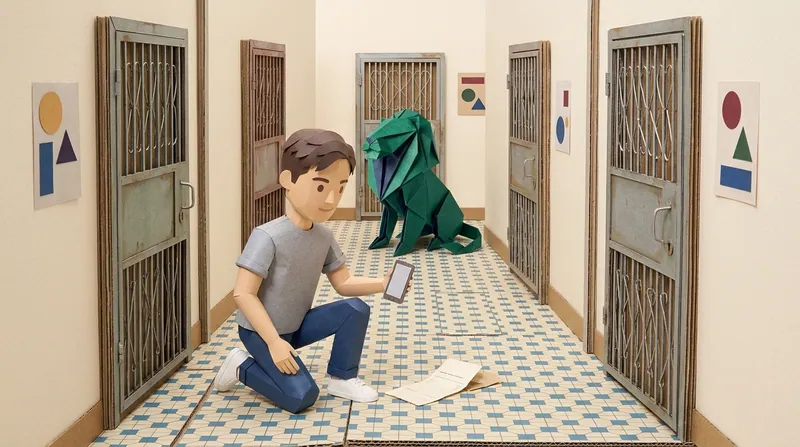
A listing reads "owner renting directly, no agency fee" and the price undercuts the market. After a few messages, it turns out the person you're dealing with isn't the owner at all — they're a "sub-landlord" who says they're "managing it for the owner." You pay the deposit, sign an informal sub-tenancy, and when it's time to move out and get the deposit back, they stop replying. Dig further, and you find the actual owner has never heard of you.
This kind of sub-landlord arrangement is common in Hong Kong's rental market, especially in subdivided flats — and when it goes wrong, recovering the money works very differently from paying a deposit straight to an owner. You first need to work out who you actually have a legal relationship with, who the recovery target should be, and whether the true owner carries any responsibility at all. This article walks through all of that, plus the single most useful step you can take before you ever hand over money.
What a sub-landlord actually is
"Sub-landlord" isn't a formal legal term, but the idea is simple: this person signed a "head tenancy" with the real owner, renting the whole unit, and then re-lets it (or a partitioned room within it) to you under a separate "sub-tenancy." Legally, your tenancy relationship exists only with the sub-landlord — not with the true owner.
This arrangement isn't inherently a problem — plenty of subdivided-flat and shared rentals work this way. Trouble arises in two situations: first, when the sub-landlord sublets without the owner's consent, or the owner has no idea it's happening at all; second, and worse, when it's a full-blown organised scam. Police investigations have documented a real pattern: syndicates recruit local residents to rent units across Hong Kong, typically paying the true owner only three months' rent as a deposit, then pose as the unit's owner (calling themselves the "sub-landlord") and re-let it to newly arrived residents or students, luring them with a discount for prepaying a full year's rent up front — and pocketing the gap between what they paid the owner and what they collected from the new tenant. One such syndicate had at least 150 victims and over HK$13 million involved, averaging HK$100,000–200,000 in losses per victim, with the worst single loss exceeding HK$300,000.
That case describes a relatively "grounded" version of the scam — the sub-landlord genuinely paid the owner, and the unit genuinely exists. Later developments were worse still: some syndicates never rented any unit at all, posing as an owner or sub-landlord purely to defraud victims who never moved into any flat of their own. Either way, the core trap is the same: you aren't dealing with an owner. You're dealing with a middleman who has no regulatory oversight over your deposit and can disappear at any time.
Before you pay: checking ownership at the Land Registry
Working out your protections after the sub-landlord disappears is already one step too late. The single most effective move happens before you pay anything.
Step one: search the Land Registry to confirm who the registered owner actually is. Anyone can use the Land Registry's "Integrated Registration Information System" (IRIS, at iris.gov.hk) online search service without prior registration — search by the property's address or building details to find a "Property Reference Number," then order a copy of the land register to check the currently registered owner's name. It takes a few minutes and costs a modest fee, and it immediately tests any claim of "I'm the owner."
Step two: ask the sub-landlord to show their own head tenancy with the true owner. Even once ownership is confirmed, that doesn't automatically mean the sub-landlord is allowed to sublet — the head tenancy may not permit subletting at all, or may expressly forbid it. Asking to see the relevant clauses (at minimum, the term and any subletting provision) confirms whether re-letting to you was actually authorised. If the person hesitates or won't produce any document at all, treat that as a serious warning sign on its own.
Is the true owner liable for the deposit?
This is where most people get it wrong. Once a sub-landlord vanishes without returning the deposit, the instinctive move is to chase the real owner — but legally, that often doesn't work.
Per the Community Legal Information Centre (CLIC), a sub-tenant has no direct contractual relationship with the head landlord (the true owner) — the owner is not a party to the sub-lease, so the terms of a sub-tenancy are generally only binding and enforceable between the sub-landlord and the sub-tenant. In other words, the deposit you paid rests on the sub-tenancy between you and the sub-landlord; the true owner isn't a party to that transaction at all.
Following that through: the true owner generally isn't liable for a deposit the sub-landlord collected without authority and never returned — unless the owner was personally involved in collecting it, instructed the sub-landlord to collect on their behalf, or made a separate written agreement with you to take on that liability. Absent that, the recovery target is usually the sub-landlord personally, not the owner. This differs from a deposit held by a licensed estate agent as stakeholder — that's a regulated party with a statutory duty; a sub-landlord is simply the other party in a private sub-letting arrangement, with none of that oversight. If your situation is really about the owner chasing unpaid rent in a subletting arrangement rather than a deposit dispute, see how subletting rent-arrears cases are typically handled.
That said, if you have real evidence that the owner actually knew — for example, the owner personally appeared at some point, received part of the payment, or gave written confirmation of your tenancy — the owner's responsibility needs re-examining. In that scenario, set out the relevant evidence clearly in your demand letter and send it to both the owner and the sub-landlord, asking each to confirm the situation in writing.
Already paid: what evidence actually helps?
Once you've confirmed the sub-landlord personally is the recovery target, the practical question is evidence. These cases are often especially difficult because there was never a formal contract to begin with, and sometimes you don't even know the sub-landlord's real identity.
Try to hold on to as much of the following as possible, even if it feels incomplete:
| Evidence | Why it matters |
|---|---|
| Payment records (bank transfer, cheque copy, FPS record) | Direct proof of how much you paid and when — the clearest evidence of the amount |
| WhatsApp or other chat records | Records the agreed deposit amount, tenancy terms, and any refund promises |
| A sub-tenancy document, however informal (even a handwritten note) | Proves a tenancy arrangement genuinely existed — not just a verbal claim |
| The sub-landlord's identifying details | A phone number and a name may be all you have — but you'll still need this for filing and serving documents |
If you don't even have the sub-landlord's real name or ID, and only a phone number and a WhatsApp account, filing and serving documents becomes harder, but it doesn't mean you can't pursue a claim — our guide to preparing evidence covers how to build a usable basis for a claim even when your records aren't complete. What ultimately decides deposit-recovery cases like this is always which side can actually produce something concrete — in a deposit dispute case we handled, the client's move-out-day photos and a single WhatsApp confirmation were enough to shrink the landlord's claimed damages substantially; the same principle applies here: evidence that is specific and time-stamped is what a Tribunal can actually work with.
Recovering the deposit: from demand letter to the Small Claims Tribunal
Once your evidence is together, recovery happens in two steps.
Step one: a written demand letter. A formal demand letter clearly stating the deposit amount, payment date, sub-tenancy terms and a deadline for repayment, sent to the sub-landlord through every contact channel you have (WhatsApp, email, even SMS), is often enough to move things forward — at minimum, it tests whether they're still reachable at all. Your demand letter should include:
- The deposit amount, payment date, and payment method
- The sub-tenancy term, the move-out date, and a specific deadline for the refund
- A brief record of your prior attempts to reach them, if they've already gone quiet (dates and methods)
- A clear statement that you'll consider filing at the Small Claims Tribunal if there's no reasonable response by the deadline
Step two: filing at the Small Claims Tribunal. If the demand letter gets no response, a deposit dispute of HK$75,000 or under falls within the Small Claims Tribunal's jurisdiction, and legal representation isn't required. The Tribunal handles monetary claims not exceeding HK$75,000; filing fees run in four bands — $20 up to $5,000, $40 up to $25,000, $70 up to $50,000, and $120 up to $75,000. Before filing, prepare your claim form clearly stating the sub-landlord's name (or whatever identifying details you have), the deposit amount, and the basis of your claim.
If you can't even find an address to serve the sub-landlord, try piecing one together from Land Registry search results and anything on the sub-tenancy document. If you'd rather not handle the forms and service process yourself, our filing support service covers exactly those steps, and our deposit dispute case type has more on how these cases are generally handled.
FAQ
You can still try. When filing, you can name the sub-landlord using whatever you know — a phone number, a WhatsApp account, the name they used with you — and the Tribunal's process has ways of handling that. But missing identity details makes serving documents, and ultimately enforcing any judgment, harder, so push for proper identification at the demand-letter stage if you possibly can.
Generally, yes. Since the owner isn't a party to the sub-tenancy between you and the sub-landlord, they're usually not liable for that deposit. But if you have evidence the owner actually knew, or was somehow involved in or benefited from the arrangement, that changes the picture — set out the evidence clearly in your demand letter and send it to both the owner and the sub-landlord.
If your Land Registry search shows no connection at all between the person you paid and any real owner of the unit — in other words, it was a pure scam — that goes beyond an ordinary civil recovery matter, and you should also report it to the police. On the civil side, as long as you've kept your transfer records, chats and any contact details for the other party, you can still pursue a claim at the Small Claims Tribunal, but whether you actually recover anything depends heavily on whether the other party can be identified and has any enforceable assets.
No. A search takes a few minutes and costs a modest fee, which is negligible against the risk of losing an entire deposit, or a full year's prepaid rent. A genuine sub-landlord with a properly authorised arrangement shouldn't find it difficult to accommodate a request to verify ownership and show the head tenancy — if they seem impatient or evasive about it, that's worth taking seriously.
EasyDebt is not a law firm. This article is for general procedural information only and does not constitute legal advice; individual cases are subject to Hong Kong law and the Tribunal's determination.
Further Reading
This article is for general reference only and does not constitute legal advice. We are not a law firm; please evaluate your individual case based on specific circumstances.