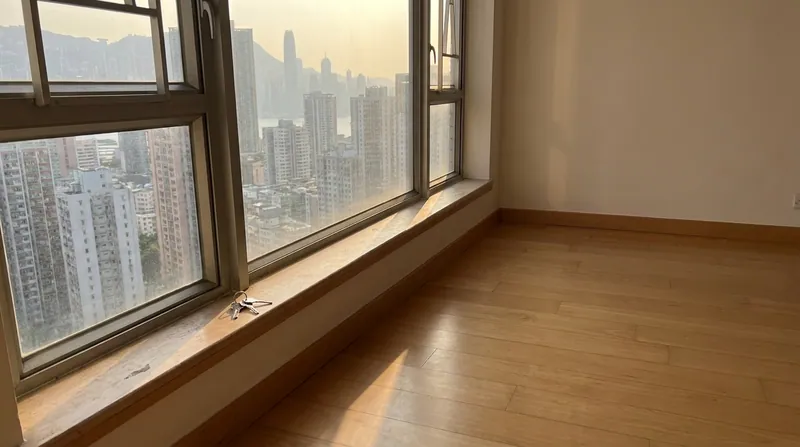
The Landlord Claimed Damage and Kept Two Months' Deposit — HK$22,200 Recovered
She photographed every room on the day she handed back the keys. The landlord still claimed scratched walls and a broken shower head, and kept all HK$24,000. This illustrative case shows why a deposit dispute is not won by arguing about the state of the flat — it is won on who can produce a receipt. The landlord alleged HK$24,000 of damage and produced HK$1,800 of proof.
Recovered in full — Won — HK$22,200 Recovered
- FiledDay 0
- Hearing—
- RulingDay 90
AGAINST THE OTHERSAcross 9 published illustrative cases the median is 75 days and HK$22,000. This one ran 90 days, about 15 days over that median.
How it was done
Records the claimant already had Evidence 1
Room-by-room photographs taken on handover day
Living room, bedroom, bathroom, kitchen — all shot on the same day, in one pass, down to the skirting boards and the shower head. A single photo says roughly what it looked like. A set organised by room says this is what the whole flat looked like at the moment it was handed back.
 Evidence 2
The WhatsApp confirming the keys were returned
The landlord's own reply — 'got the keys' — dated the entire photo set. Without it, the other side could argue the photos were taken weeks before the move-out and that the damage happened afterwards.
 Evidence 3
The landlord's own written list of deductions
By putting 'scratches on the walls' and 'broken shower head' in writing, the landlord fixed the scope of the dispute. At the hearing he could no longer add new items.
We talk through whether your claim is worth pursuing first. The assessment is free.
Background
Our client rented a residential flat on Hong Kong Island for two years at HK$12,000 a month, and paid two months' deposit at the start of the tenancy — HK$24,000 in total.
The tenancy ran its full term. She owed nothing, packed up on time, cleaned, and handed back the flat and the keys. On handover day she did one thing that mattered later: she went through the flat with her phone and photographed every room — living room, bedroom, bathroom, kitchen, down to the skirting boards and the shower head. Then she messaged the landlord to say the flat and keys had been returned. He replied: "got the keys."
Three weeks later his message arrived. Scratches on the walls. A broken shower head in the bathroom. Repairs had used up "just about all of it". Not a dollar of the deposit would be returned.
No quotation. No receipt. No photographs. Two sentences and a conclusion.

The landlord only says there is damage — no receipt, no quotation. Can he keep the whole deposit?
This is where most tenants get stuck. The landlord insists there is damage, the tenant is sure there is none, and it feels like two accounts with no way to choose between them.
But a deposit is not money the landlord gets to decide about. Its legal function is to cover actual loss — so a landlord who wants to deduct has to identify which item, and what it cost. Once that is unpacked, the case stops being about who sounds more certain and becomes about who can produce something.
What our client had was precisely what the other side did not:
| Evidence | What it establishes | Why it mattered in this case |
|---|---|---|
| Room-by-room photographs from handover day | The actual condition of the flat at the moment it was returned | The landlord alleged "scratches on the walls"; the photographs show light, scattered marks of ordinary use, not damage |
| The "got the keys" WhatsApp | Which day the photographs were taken, and when the landlord took the flat back | Without it the other side could say the photos predated the move-out by weeks; with it the timing is fixed |
| The landlord's own written deduction list | That his alleged damage came to exactly two items | At the hearing he could not add new items — he had defined the scope himself |
| The tenancy agreement signed two years earlier | The deposit amount and what the deduction clause actually says | The right to deduct comes from the contract wording, not from the landlord's assertion |
The tenant did not have to prove the flat was flawless. She had to show that the damage the landlord alleged was damage he could not prove. That distinction is the whole case. The full approach to recovering a withheld deposit — the steps, the costs and the timeline — sits on that page.
How We Helped
| Step | What we did | What it did for the case |
|---|---|---|
| 1. Organise the handover record | Sorted several dozen photographs by room and by sequence, each one labelled with its location | Turned a phone camera roll into a record an Adjudicator can read in ten minutes |
| 2. Line it up against the tenancy | Went back to the deposit and handover clauses and marked what the landlord could and could not deduct | Moved the dispute from "you think it was damaged" to "this is what the contract says" |
| 3. Separate the deduction items | Split the landlord's two allegations item by item, flagging which was ordinary wear and which needed proof from him | Replaced a blanket "I disagree" with a specific answer to each item |
| 4. Prepare the filing | Form 1 and Form 2 setting out the deposit amount, the tenancy period, the landlord's stated reasons and the points in dispute | The Adjudicator knew what was being argued on opening the file |
| 5. Prepare for the hearing | Rehearsed walking the Adjudicator through the photographs in sequence, and how to answer if the landlord added items on the day | She appeared on her own without being led off course |
The turning point: he alleged HK$24,000 of damage and produced one receipt for HK$1,800
At the hearing the landlord produced a repair receipt.
The amount: HK$1,800.
Three weeks earlier he had said repairs used up "just about all" of HK$24,000. What he could actually substantiate at the Tribunal was one-thirteenth of it. For the remaining HK$22,200 there was no quotation, no receipt, no before-and-after photograph — just the phrase "there were scratches".
The Adjudicator went through our client's room-by-room handover photographs, then looked at the landlord's receipt, ruled that he could retain HK$1,800, and ordered HK$22,200 returned.
She did not win an argument. The two sides' evidence was placed side by side and the gap spoke for itself.

What most tenants do not know: "30 days to return the deposit" is not a law
Plenty of landlords will say "the law gives me 30 days". For an ordinary residential or commercial tenancy that has no basis — there is no Hong Kong statute setting a uniform number of days for returning a deposit. When it must be returned is answered by the tenancy agreement, not by legislation.
The one situation with a real statutory deadline is the subdivided unit. Since 22 January 2022, Part IVA of the Landlord and Tenant (Consolidation) Ordinance (Cap. 7) provides that for a "regulated tenancy", once the tenant has handed back the subdivided unit and settled any outstanding sums, the landlord must return the deposit free of interest within 7 days. Seven, not thirty. So the landlord's "30 days" is neither the general rule (which does not exist) nor the subdivided-unit rule.
The other point that misleads people is how much is payable. Even where something genuinely is damaged, what is normally recoverable is the depreciated value, not the cost of a brand-new replacement. The Community Legal Information Centre (CLIC) puts it plainly on handover:
Generally the tenant has no duty to "improve" the property beyond the condition it was in when the tenancy started. Wear and tear arising from ageing and normal use is foreseeable, and the landlord may have to reasonably accept it at handover.
Put another way: a five-year-old shower head charged at the price of a new one is already an over-deduction. For how that line is drawn item by item, see the difference between fair wear and tear and actual damage; for the full sequence from demand letter to filing, see the rental deposit recovery guide.
⚠️ The above is general legal information and does not constitute legal advice. Tenancy agreements differ; verify your own position or seek professional advice.
Outcome
| Item | Result |
|---|---|
| Ruling | The landlord could retain only the HK$1,800 supported by an actual receipt |
| Amount ordered | HK$22,200 returned to our client |
| Costs | The filing fee was borne by the losing party (at the Adjudicator's discretion, not automatic) |
| Filing to determination | Approx. 3 months |
| Afterwards | The landlord paid as ordered and the case closed |
Key Success Factors
- Photograph on handover day, not after moving out. Every room, all in one pass, so the whole set carries a single fixed date.
- One "got the keys" message dated the entire photo set. Without that WhatsApp the other side could argue about when the photographs were taken, and the whole bundle loses weight.
- Get the landlord to put his deduction reasons in writing. The moment he wrote "wall scratches" and "broken shower head" he fixed the scope, and could not add items at the hearing.
- Move the dispute from impressions to proof. Not "was the flat clean enough", but "where is the receipt for what you are deducting".
- Concede the part that is provable. Our client did not contest the HK$1,800. Fighting something the other side can prove only weakens everything else.
Why a Similar Case Plays Out Differently
Another case on this site — three years of ceiling leaks with no compensation — is also a tenant against a landlord, also in the property category, and is argued almost the opposite way:
| Deposit withheld (this case) | Ceiling leak claim | |
|---|---|---|
| Where the money is | Already in the landlord's hands; the tenant has to get it back | Never paid; the tenant has to get the landlord to pay out |
| Who must prove what | The landlord — he alleges damage, so he must prove the damage and the amount | The tenant — she must prove the landlord knew, was responsible, and did nothing |
| Centre of gravity of the evidence | A single point in time: handover day | A three-year timeline of damage getting worse |
| The most damaging fact | The other side could not produce a receipt | The landlord's own replies: "I know", "I'm finding someone" |
| Duration | Approx. 3 months | Approx. 2.5 months |
The difference is which side carries the burden. In a deposit dispute the money is already with the landlord and he has to justify keeping it; in a leak claim the money is still in his pocket and the tenant has further to walk to establish that he is liable. Working out which kind you are in tells you which evidence to be collecting.
Questions this case answers
+The landlord only says there is damage — no quotation, no receipt. Can he still keep the deposit?
How much he can keep depends on how much he can prove, not on how serious he says it is. A deposit exists to cover actual loss; it is not a penalty he can claim by assertion. Fair wear and tear from ordinary use falls outside what may be deducted at all. So a landlord who wants to deduct has to produce the matching evidence — a quotation, a receipt, a repair record. In this case the landlord said verbally that the whole HK$24,000 was damage, produced one receipt for HK$1,800, and the Tribunal allowed him to keep HK$1,800.
+Scratched walls, slightly faded paint — does that count as tenant damage?
Usually not. A tenant must use the property in the way a reasonable tenant would, but fair wear and tear is expressly excluded. After two years, light scuffing along the skirting and some fading of the paint is foreseeable ageing. Worth knowing too: even where something genuinely is damaged, what is payable is normally the depreciated value, not the price of a brand-new replacement — a five-year-old shower head is not charged at the cost of a new one.
+The landlord says the law gives him 30 days to return the deposit. Is that true?
For an ordinary residential or commercial tenancy there is no Hong Kong statute setting any fixed number of days for returning a deposit. The 30-day figure comes from the tenancy agreement or from the landlord himself, not from legislation. The one situation with a real statutory deadline is a regulated tenancy of a subdivided unit, and there the period is 7 days, not 30. So a landlord citing 30 days is citing neither the general rule (which does not exist) nor the subdivided-unit rule. The first step is to read your own tenancy agreement.
+How long does a case like this take from filing to getting the money?
This one took about three months from filing to determination. The rules require the first hearing to be listed within 60 days of filing, but after listing it still depends on whether the other side turns up, whether a review is sought, and when the losing party actually pays. The results card at the top of this page compares the duration against the median of every published illustrative case on this site, and that figure moves as cases are added rather than being written in.
This is an illustrative case, adapted from the kinds of matter the Hong Kong Small Claims Tribunal hears. It is not the record of an identifiable client, and no outcome shown here is a promise about yours.