Water Leakage Claims: How to Recover Repair Costs When the Upstairs Owner Won't Pay

EasyDebt Editorial
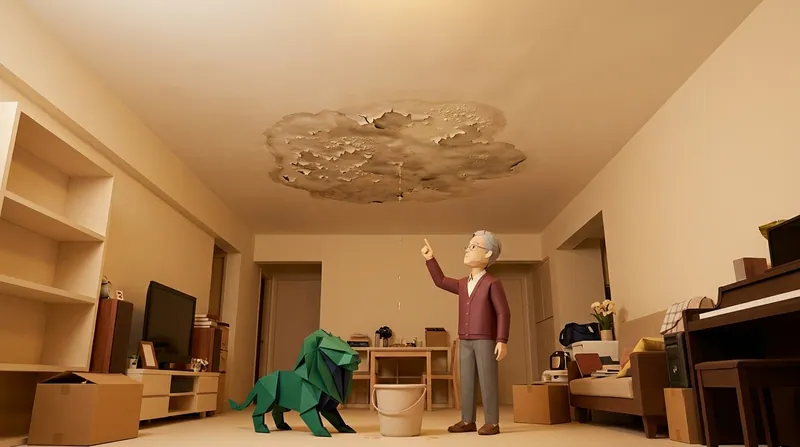
A leaking ceiling, mould creeping up the walls, warped timber flooring — water seepage from an upstairs unit causes far more than a cosmetic problem for the flat below; it comes with real repair bills. The hardest part usually isn't working out who's responsible — it's dealing with an upstairs owner who knows exactly what's wrong but keeps avoiding, delaying, or flatly refusing to pay.
This article explains how to use the government's water seepage investigation mechanism (including the faster procedure introduced in July 2026), what evidence you need to prepare yourself, and how to recover repair costs and related losses through the Small Claims Tribunal once negotiation breaks down. This pattern — where an official body can investigate or even penalise, but has no power to force a payout — isn't unique to water leakage disputes. The Travel Industry Authority plays a similarly limited role in travel agency disputes; see the guide to travel agency cancellations and refunds for how that same "you can complain, but that doesn't mean you'll get paid" bind plays out there.
What the Joint Office for Investigation of Water Seepage Complaints Can Do
Hong Kong's Joint Office for Investigation of Water Seepage Complaints, jointly run by the Buildings Department and the Food and Environmental Hygiene Department, investigates leakage cases and uses electronic moisture meters, non-destructive tests, and similar methods to pinpoint the source. You can report a case by calling "1823", or by following the instructions on the Joint Office's website.
How Does the New Procedure from 16 July 2026 Differ from Before?
From 16 July 2026, the government has rolled out a new pilot scheme for private-building water seepage complaints, with the main change being that the "first notice to the suspected source unit" comes much sooner:
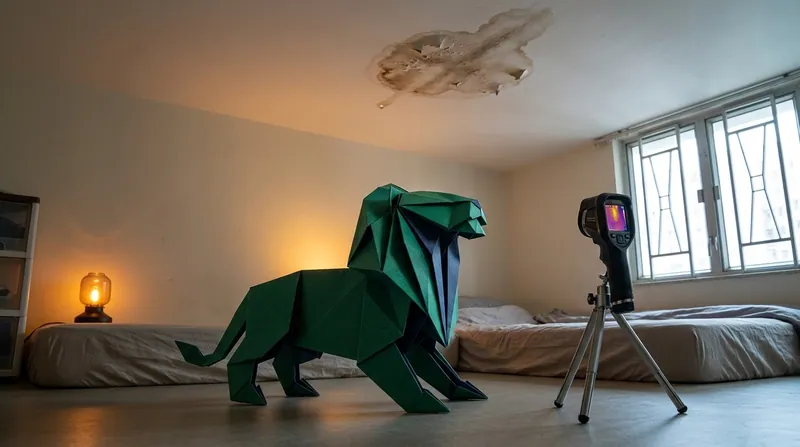
- Stage 1: The Joint Office now adds infrared thermal imaging analysis early in the investigation, alongside the existing electronic moisture meter readings (the affected area must show a moisture reading of 35% or above before an investigation proceeds). If there is preliminary reason to believe the leak originates from the unit above, a "suggested repair notice" can be issued to that owner within as little as 14 working days — roughly 57 working days faster than the previous procedure.
- Once notified, the owner has 28 calendar days to arrange their own inspection and repairs.
- If the owner fails to respond in time, the Joint Office will issue a "nuisance notice" and can recover inspection costs (no less than HK$17,000) from an owner who ignores the notice.
- If the problem persists, the case moves into the basic and professional investigation stages, which may include microwave tomography to further pinpoint the source.
- The new procedure applies to new complaints received from 16 July 2026 onward; cases already accepted before that date continue under the old procedure. The government has also partnered with more than 330 property management companies on a community mediation scheme to encourage owners and residents to resolve disputes by agreement.
In other words, the new procedure mainly speeds up "confirming the source and notifying the owner to repair" — it does not directly recover money on your behalf.
What the Joint Office Will and Won't Do
What it will do:
- Send officers to inspect the site and use equipment to trace the source of the leak
- Issue a "suggested repair notice" or "nuisance notice" to the suspected source unit, requiring follow-up repairs
- Provide a relatively credible third-party finding that can serve as important evidence in a later claim
What it won't do:
- It will not chase the owner for repair costs or other losses on your behalf
- It cannot compel the owner to pay compensation — it can only push for repairs or refer the case to enforcement agencies
- If the owner refuses to cooperate or won't let inspectors into the unit, the Joint Office must apply to the court for a warrant to gain access, which lengthens the process
Even with the faster notification timeline, the Joint Office's role is still limited to helping confirm where responsibility lies — recovering the money is ultimately something the affected resident must do themselves. This is exactly where many people get it wrong, assuming that once a government department steps in, compensation follows automatically.
Three Common Attitudes Behind an Owner Who Won't Pay
However clear the investigation findings are, an upstairs owner's response usually falls into one of three patterns — and how you handle it depends on which one you're facing.
Three Common Scenarios — Which One Sounds Familiar?
"Not my problem" — disputing the source: Some owners insist the leak doesn't come from their unit, pointing to shared pipes, external walls, or even suggesting the waterproofing fault lies in your own flat. In this scenario, an objective inspection report carries far more weight than any argument back and forth.
"I'll get to it eventually" — going quiet and stalling indefinitely: Some owners don't deny the problem, but keep pushing it back for months, even a year, with "I'll deal with it later" or "I'll find someone", while nothing actually gets repaired. Under the new procedure, owners must respond within 28 days — if they don't, you can ask the Joint Office to follow up on enforcement of its "nuisance notice".
"Whatever it costs, it's too much" — admitting fault but refusing a fair amount: Some owners accept that the leak originates in their unit, but say the repair quote is "sky-high" and will only pay part of it, or won't engage in a discussion about the figure at all.
Whichever pattern applies, the approach is the same: establish responsibility with objective evidence first, force a response through written records, and only then consider the Tribunal.
The Evidence Work You Must Do Yourself, Beyond the Official Investigation
The government's investigation findings are just one piece of evidence — what really determines whether your claim succeeds is whether you've kept thorough records from day one.
What Evidence Should You Gather?
- Video and photos: As soon as you notice the leak, photograph and film the ceiling/wall seepage, damaged furniture, appliances, and flooring, with dates attached; if you take moisture meter readings, record the date and location of each reading too.
- Written communication: Whether it's WhatsApp, email, or messages relayed through the management office, try to keep everything in writing rather than relying on phone calls or verbal agreements. If the owner makes a verbal promise, follow up with a text confirming it — for example, "To confirm what we just discussed, you'll arrange for someone to inspect it next week."
- Repair quotations and receipts: Get written quotations from two or three renovation/repair companies so you can justify your claimed amount later; keep every receipt and invoice for completed repairs with items and amounts clearly listed; keep receipts for any interim costs already paid, such as a dehumidifier or relocating damaged items.
| Evidence Type | Recommended Practice | Importance |
|---|---|---|
| Photos/video of the leak | Document continuously from the day you discover it, with dates and times | ★★★★★ |
| Joint Office findings/notices | Keep both the original and a copy once applied for | ★★★★★ |
| Repair quotations (2–3) | List items, materials, and labour costs | ★★★★★ |
| Paid repair receipts | Organised by date, matched against the quotations | ★★★★☆ |
| WhatsApp/email records | Screenshot and date, especially any admission or promise from the owner | ★★★★☆ |
| List of damaged items with proof of purchase | Include purchase date and original price, to calculate a fair claim amount | ★★★☆☆ |
For how to turn these materials into court-ready documents and what a witness statement should cover, see the Small Claims Tribunal evidence preparation guide.
What If the Joint Office Can't Find the Source Either?
If the Joint Office's investigation can't confirm the source, or you need a more persuasive independent report, you can commission a licensed leak-detection company or a surveying firm at your own cost. Fees vary by method: a dye test costs around HK$3,000–4,000, a pipe pressure test around HK$2,200–5,000, and a microwave scan around HK$4,000–5,000; if you need a full report suitable for submission to the Tribunal as evidence, a surveying firm's service typically costs HK$8,000–12,000. This cost can later be added to your claim amount.

How to Calculate Your Claim Amount
Your claim amount must reflect your actual loss with a clear calculation behind it — for example, "Repair costs HK$18,000 + damaged furniture HK$6,500 = HK$24,500 total." A vague estimate is unlikely to be accepted by the adjudicator.
What Items Can You Claim?
| Item | Explanation |
|---|---|
| Repair costs | The cost of repairing damaged walls, ceilings, and floors, supported by a quotation or receipt |
| Damaged furniture/appliances | Valued at market value at the time of damage, not the original purchase price |
| Temporary accommodation | If the leak was serious enough to force you to move out, reasonable short-term accommodation costs can be claimed |
| Cleaning costs | Additional cleaning expenses caused by the leak |
| Leak investigation/detection fees | Fees paid to a professional to confirm the source of the leak (see above) |
Every item needs supporting documentation — estimates or verbal figures are unlikely to be accepted by the adjudicator.
Is There a Time Limit on Claiming Water Leakage Losses
Many affected residents assume that as long as the investigation hasn't concluded, their claim can't expire. That isn't quite right.
When Does the 6-Year Limitation Period Start?
Under section 4 of the Limitation Ordinance (Cap. 347), an action founded on simple contract or tort (including damage to property) must be brought within 6 years from the date the cause of action accrued, or the right to claim is generally lost (note: tort claims involving personal injury have a shorter 3-year limitation period, which is separate from property damage claims — don't confuse the two). If, within the 6-year period, the other party acknowledges the debt in writing or makes a partial payment, the limitation clock resets. In practice, it's best to act early: water damage tends to worsen over time and evidence is harder to preserve, and the Joint Office's own investigation can take anywhere from several weeks to several months, so starting the whole process sooner works in your favour.
Negotiation Failed? How to File at the Small Claims Tribunal
Once the owner keeps refusing a reasonable settlement, and the amount (including losses already incurred and reasonably projected) is no more than HK$75,000, you can consider filing a claim with the Small Claims Tribunal.
What to Watch for Before and When Filing
Before filing formally, it's worth sending a formal demand letter clearly stating the amount claimed and a deadline — for example: "Regarding the ceiling leakage in my unit, I require payment of HK$XX,XXX in repair costs within 14 days, failing which I reserve all rights to pursue further legal action." This record also serves as evidence later that you made a reasonable attempt to resolve the dispute. If the owner still ignores you, you can go in person to the Small Claims Tribunal registry to submit Form 1 and Form 2 and pay the filing fee (HK$20–120, tiered by claim amount) to file formally.
At the hearing, the adjudicator will review the Joint Office's findings/notices, photos, and repair invoices to determine responsibility; if the owner disputes the source, the adjudicator may ask both sides for further evidence, or even consider commissioning an independent assessment. The whole process doesn't require a lawyer — both sides present their case in person — and filing fees are relatively low, making this a practical route for water leakage disputes where the owner refuses to cooperate.
If you'd like to see how water leakage disputes are handled in practice, we've written up how we approach water leakage claims. And if you would rather not work through the forms and procedure yourself, you can see what our filing assistance service covers and how the fees are calculated.
One thing to note: even after winning, a judgment isn't automatically enforced. If the other side still doesn't pay, you'll need to apply for a writ of execution (commonly known as "fi. fa.") yourself — for the full process, see how to enforce a Small Claims Tribunal judgment.
Frequently Asked Questions
Even with a suggested repair notice or a confirmed source, if the owner refuses to pay, you'll still need to pursue a written demand yourself, and file at the Small Claims Tribunal if negotiation fails. The investigation findings become important evidence for your claim, but they don't replace the step of filing to recover the money.
Yes. You can claim the outstanding difference, provided you can show the repair cost was reasonable — for example, by attaching comparable quotations from other companies.
Some home insurance policies cover third-party losses, but insurers generally only communicate with their own policyholder (the owner). You'll still need to pursue the owner directly first, and the owner would then claim from their insurer separately.
The most exhausting part of a water leakage dispute usually isn't the repair work itself — it's the standoff with an owner who won't cooperate. As long as you keep the investigation findings, photo evidence, and repair invoices in order, there's a clear legal path forward even if negotiation fails.
EasyDebt is not a law firm. This article is for general procedural information only and does not constitute legal advice. Individual cases are subject to Hong Kong law and the Tribunal's rulings.
Further Reading
This article is for general reference only and does not constitute legal advice. We are not a law firm; please evaluate your individual case based on specific circumstances.