Water Damage: Claim on Insurance or Sue at the Tribunal? A Hong Kong Decision Guide

EasyDebt Editorial

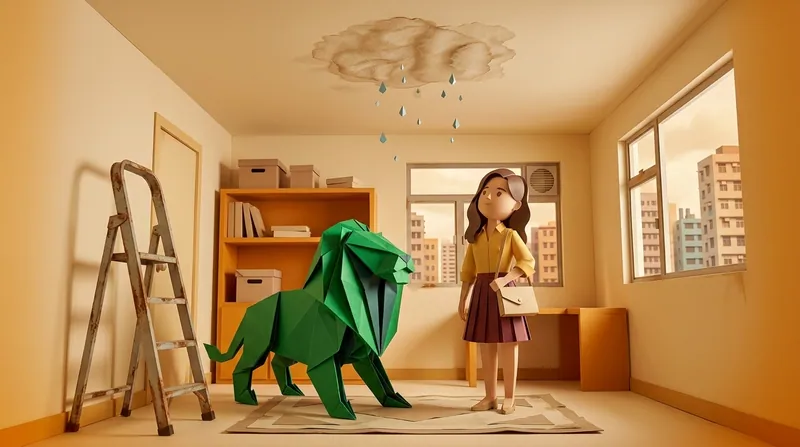
Water is coming through your ceiling from the flat upstairs — a brown stain spreading, paint peeling, furniture damp. The first instinct for most people is "I'll just claim on my home insurance." Fair enough — you've been paying the premium. But when you actually get to the claim, it's rarely that simple: there's an excess to pay yourself, some causes turn out not to be covered at all, and the payout often gets reduced for depreciation — a long way from "fully compensated."
This guide draws on public materials from the Property Management Services Authority, the Consumer Council and the insurance industry to explain how home insurance actually works for a water-damage claim, where it can fall short, and why the shortfall is still recoverable — including a claim directly against the Owners' Corporation for a common-area leak. If you want the general water-damage claim process first, see our complete guide to water-damage claims.
Insurance or Tribunal First?
These two routes aren't really an either/or choice — they usually work together: filing on insurance is normally faster but may not cover everything, while the Small Claims Tribunal lets you pursue the party actually responsible, but takes more time. The practical sequence is usually:
- Check whether your policy covers it, and if so file the claim straight away so urgent repairs can start
- At the same time, keep every receipt, photo and message — whether or not insurance ends up paying
- If insurance doesn't cover everything, or you have no insurance at all, consider a claim against the party at fault (e.g. the upstairs owner) or the Owners' Corporation at the Small Claims Tribunal, up to a ceiling of HK$75,000
What Does the "Legal Liability" Benefit Actually Cover?
Many people assume home insurance only covers damage to their own flat. In fact, most policies also include a "legal liability" (third-party) benefit — and that's the key to a leak that affects the flat below.
My flat's leak damaged my downstairs neighbour — does home insurance cover that?
Industry materials confirm that home insurance's "legal liability protection" generally covers property damage your unit's leak causes to a neighbour downstairs or elsewhere in the building, so you're not left facing the neighbour's repair and compensation costs alone. It's worth noting this benefit is typically something an individual owner voluntarily buys as part of their own home policy — a separate matter from the Owners' Corporation's own mandatory insurance for common areas. Per the Property Management Services Authority, section 28 of the Building Management Ordinance (Cap. 344) requires an Owners' Corporation to take out and keep in force third-party risk insurance, and the Building Management (Third Party Risk Insurance) Regulation, section 4, further requires a minimum single-event coverage of HK$10 million; a management committee that fails to arrange adequate cover can face a fine of up to HK$50,000. In short: a common-area failure (a shared drainpipe, the roof) is the corporation's statutory responsibility; a leak from inside a private unit's own plumbing depends on whether that owner personally holds home insurance.
If the leak originates in a common area (a burst shared drainpipe, a failed roof membrane), see our guide on claiming against the Owners' Corporation for a common-area leak.
Covered Doesn't Automatically Mean Fully Paid
Even when a policy genuinely covers the loss, that doesn't mean you recover the full amount at zero cost to yourself.
Where can a home insurance claim still leave me out of pocket?
First is the excess (deductible). Per the Consumer Council, home insurance policies generally carry an excess — the lower the premium, the higher the excess tends to be — and for water-damage items the excess typically runs roughly HK$200 to HK$1,000 per claim, with more severe events like flooding or landslip carrying an even higher excess. You bear that amount yourself regardless of how much is otherwise paid out.
Second is the distinction between "gradual wear" and "sudden accident." Standard industry practice classifies water damage caused by ageing pipes or poor maintenance as "natural wear and tear" and excludes it, while a sudden accidental escape of water (a pipe damaged during renovation work, for instance) is typically covered. This distinction is often only clear after the fact, from a surveyor's or plumber's report — it's rarely obvious at a glance — so getting an assessment and a written report done promptly after the incident matters a great deal for any later claim.
Third is how the payout is calculated. The Consumer Council also notes that home insurance payouts are calculated either on a "full replacement" or a "depreciated actual cash value" basis, which directly affects the final amount — if your furniture or appliances are several years old, a depreciated payout can fall well short of the cost of buying new.
Put together, even an accepted claim can still leave a real gap to cover yourself — and that gap is exactly what the next section addresses.
Insurance Doesn't Cover Everything — Chasing the Shortfall
The excess, exclusions and depreciation can add up to a meaningful sum. This is where establishing who's actually responsible becomes the key.
Can I still recover the gap insurance didn't pay?
Yes. If the leak is the upstairs owner's responsibility (their pipe burst, or renovation work damaged plumbing and it affected you), you can pursue that shortfall directly against the upstairs owner at the Small Claims Tribunal, up to a ceiling of HK$75,000; if it's a common-area matter, pursue the Owners' Corporation instead. And if you had no home insurance at all, this route matters even more — you can pursue the entire loss (repairs, damaged furniture and appliances) against the party at fault.
When preparing to file, gather: photos and video of the damage, repair or replacement quotations and receipts, a surveyor's or plumber's assessment report, and written correspondence with the other party. To understand how to fill in the claim form and roughly what the Tribunal filing fees look like, those two guides are worth reading first. If you'd rather have someone walk the whole process with you, see what our filing assistance service actually covers.
Insurance Already Paid Out — Can I Still Sue the Other Party?
A question many policyholders ask: once the insurer has paid me, is the matter closed?
The insurer already paid me — can I still go after the party at fault myself?
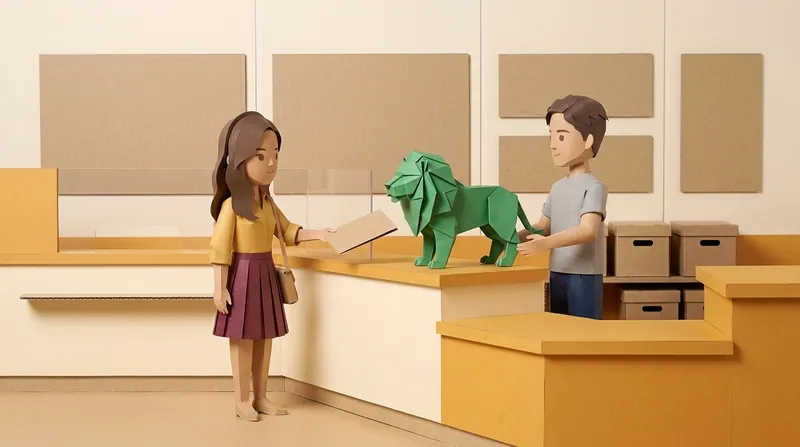
In principle, once an insurer pays your claim, it acquires what's known as a "subrogation" right — it can step into your shoes and pursue the party at fault itself for the amount it paid you. CLIC (the Community Legal Information Centre) explains this mechanism using personal injury insurance as an example: if a policyholder has already received compensation directly from the party at fault, that amount is offset against what the insurer must pay — the point being to prevent double recovery for the same loss, and the same anti-double-recovery logic applies to ordinary home insurance contracts too.
Practically, this cuts two ways. First, for whatever amount the insurer has already fully paid, you shouldn't separately ask the party at fault for that same amount again — doing so risks double recovery. Second, the insurer typically only subrogates for the amount it actually paid — your own excess, and any shortfall the policy didn't cover, remain your responsibility, and you can still pursue that portion against the party at fault yourself (this is exactly the legal basis for the "shortfall" claim described above). If you're not sure which part your insurer is already pursuing and which part is still yours to chase, it's worth checking with the insurer first to avoid confusion from two claims chasing the same loss.
Which Route Fits Your Case?
Putting it together, here's a practical order of operations:
- You have home insurance and liability is clear: file the claim first to get repairs moving, keeping every receipt; once the insurer pays, consider pursuing the party at fault for any remaining excess or exclusion gap
- You have home insurance but aren't sure it's covered: still file, and get the insurer's written decision; keep gathering evidence in parallel, since it's useful for a Tribunal claim even if the insurer declines
- You have no home insurance, or the insurer has declined: go straight to gathering evidence and pursue the party at fault (the upstairs owner or the corporation) at the Small Claims Tribunal for the full loss
- Insurance already paid the full amount: you generally don't need to act — the insurer may pursue subrogation on its own
Policy wording, exclusions and payout methods vary by insurer — this guide describes common industry practice; your actual coverage depends on your own policy's terms. For a closer look at how a water-leakage claim actually plays out, see our dedicated overview.
Frequently Asked Questions
It depends how much the insurance covered. If it covered your full loss (including the excess), the insurer will typically pursue subrogation on its own and you don't need to act. If there's still a gap — the excess, an exclusion, or depreciation — that portion remains your responsibility, and you can pursue it yourself against the party at fault.
This usually needs a professional opinion. Get a surveyor or plumber to assess it and provide a written report explaining the cause and timeline as soon as possible. That report helps both an insurance claim and, if needed later, a Tribunal claim.
The Small Claims Tribunal's ceiling is HK$75,000; it has no jurisdiction over the amount above that. If your loss significantly exceeds this ceiling, you'd need to consider the District Court or another route, and it's worth seeking legal advice first.
EasyDebt is not a law firm. This article is general procedural information only, not legal advice. Individual cases depend on Hong Kong law, the Tribunal's ruling, and the terms of your own policy.
Further Reading
This article is for general reference only and does not constitute legal advice. We are not a law firm; please evaluate your individual case based on specific circumstances.