Beauty Salon Sold You Hundreds of Sessions That Expire Before You Can Use Them? Recovering the Value

EasyDebt Editorial

"I still have hundreds of sessions left, but the package expires next month." If that sounds familiar, and the salon's answer is simply "the contract states the validity period", you may feel there is nothing to do. This article is about the narrower situation in which the package is perfectly valid and the salon is still trading — but the expiry term, combined with the sheer number of sessions sold, may be the real problem.
It draws on a published Consumer Council case, the government's 2026 consultation and the Hong Kong Judiciary's guidance. (If your question is about changing your mind after signing rather than running out of time, see No Legal Cooling-Off Period for Beauty Salons.)
Did the Package Really Expire Because You Ran Out of Time?
The usual reply is: "The contract says two years, use it or lose it." Two questions are worth separating:
- Could the number of sessions sold ever realistically be used? If you can attend a few times a month, being sold hundreds of sessions suggests the mismatch existed on day one.
- Did the salon make it harder to use them? Limited booking days, mandatory gaps between sessions, or appointments offered months away all shrink the sessions actually usable within the period.
Neither point wins the case on its own, but they give you an argument. If you never tried to book and kept no records, it is hard to show where the problem lay.
The Consumer Council's 550-Session Case
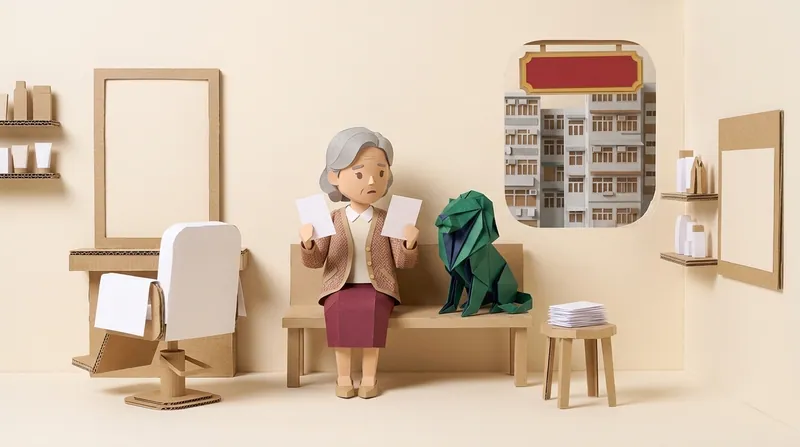
In its case sharing on older consumers, the Consumer Council recorded a beauty salon case in which an elderly customer found in February 2025 that she had over 550 unused sessions and only two years of validity left — more than 20 years' worth even at one session every two weeks. According to the case, her spending in 2022–2023 exceeded HK$300,000, she paid HK$70,000 in full in 2024, and in 2025 bought a HK$35,000 course (HK$9,000 paid, HK$26,000 outstanding).
The lesson: looking at the expiry date alone is not enough; look at the validity period against the number of sessions sold. The Council also suggests that merchants proactively tell consumers how many sessions remain and when they expire before selling a new course, and print contracts in larger type for older customers. This is a published case, not a promise about your own outcome — every dispute turns on its own contract and evidence.
How the Unconscionable Contracts Ordinance May Help
If a contract term is clearly one-sided, you may argue it is unconscionable under the Unconscionable Contracts Ordinance (Cap. 458). Per the Consumer Council's summary, courts consider factors such as the imbalance of bargaining power and whether the trader exploited the consumer's weak position. In one case, salon staff sold a client 267 treatments worth over HK$48,000 within 10 days; the court found three terms unconscionable — though that did not void the whole contract.
Applied to expiry, the argument would be that selling a quantity that could not be used within the validity period, particularly alongside booking restrictions, left the consumer without the benefit they paid for. Be realistic:
- This is an argument, not a guarantee; a court or tribunal weighs the evidence.
- The burden of proof is on you, hence the evidence section below.
- Even if a term is struck out, you do not automatically recover everything you paid.
The Proposed Two-Year Cap — What It Means for You Now
In the consultation launched on 29 June 2026 on amending the Trade Descriptions Ordinance, the government proposed:
- a 7-calendar-day statutory cooling-off period plus a 14-calendar-day refund period for prepaid beauty and fitness contracts;
- a two-year cap on contract length.
The consultation closed on 31 August 2026. These are policy proposals, not law in force, so you cannot yet say "the government has capped contracts at two years". A cap on contract length is also a different protection from a cooling-off right to cancel early. Check the government's latest announcements rather than assuming either has passed.
The Evidence That Makes Your Case Credible
- The contract and receipts — total sessions sold, validity period, refund and expiry terms.
- The arithmetic — sessions remaining ÷ sessions you can realistically book per month. A simple sum shows plainly that they cannot all be used.
- Booking records — WhatsApp messages, call logs or screenshots showing when you tried to book, what dates were offered, and any "fully booked".
- Refusals to schedule — if staff said "we can't fit you in before expiry", ask again in writing so the reply is on record.
- Purchase history — date and amount of every top-up, especially any sold close to expiry.
If you have no records, start communicating in writing today. More tips in our evidence preparation guide.
Working Out Whether the Numbers Add Up
Before you write to anyone, do the sums, because a clear calculation is the most persuasive thing you can attach to a request. Take the number of sessions left on your account and divide it by the number you can realistically attend each month, given your work, family and the salon's own opening hours. If the answer is far longer than the time left on the package, you have shown the mismatch in a way a salon manager, a Consumer Council case officer or a tribunal referee can follow in seconds.
Then add the salon's side of the picture. If the salon only accepts bookings on certain weekdays, requires a gap of several weeks between sessions, or regularly tells you the next free slot is months away, work out how many sessions could have been used even if you had booked at every opportunity. That second number is often much smaller than the first, and it is the one that matters when you argue that the arrangement was unfair from the start.
Keep the working simple and honest. Do not round in your own favour, and do not claim you would have attended every single week if your own records show you cancelled several appointments. Any weakness in your account will be spotted, and it can undermine the stronger parts of your case. A modest, accurate figure that you can back with messages and receipts will carry more weight than a dramatic one you cannot support.
What Your Written Request Should Say
Many people wait until the last month. Write earlier: "I asked in good time" is itself evidence. A useful request needs no legal jargon, but it does need to be specific:
- State the facts: purchase date, total sessions sold, sessions used, sessions remaining and the expiry date.
- Explain your difficulty: how many times you tried to book within the validity period, which dates the salon offered, and why those dates cannot cover all the remaining sessions.
- Say what you want: choosing one is better than being vague — an extension to a specific date, or a pro-rata refund for unused sessions, with your expected calculation.
- Set a reasonable deadline: for example seven to fourteen days, so the salon knows you will follow up, without sounding like a threat.
- Keep copies and proof of sending: send by WhatsApp or email and screenshot it; if you use registered post, keep the receipt.
Avoid emotional accusations. A calm letter with figures and dates makes a far better impression if it is later shown to the Consumer Council or the Tribunal. And do not stop chasing because a member of staff says "we'll look into it" — confirm every verbal reply in writing, for example: "Thanks for your call saying you would consider an extension; when can I expect an answer?"
Common Mistakes to Avoid
- Waiting until after expiry. Once the package has lapsed the salon finds it easier to say it is void. A written request for an extension while time remains is stronger than a claim made afterwards.
- Relying on verbal assurances. "Don't worry, we'll fit you in" can easily become "nobody remembers that" a few months on.
- Buying more to get an extension. If the salon makes an extension conditional on a further purchase, be careful: it adds to your unused sessions and enlarges the problem. First clarify what remains and what arrangements are actually possible.
- Assuming a signature ends the matter. Signing shows you saw the terms; it does not mean every term is necessarily enforceable. That is exactly why you need evidence supporting your argument.
Step by Step: From a Written Request to the Small Claims Tribunal
| Step | What to do | Notes |
|---|---|---|
| 1. Written request | Write or message the salon asking for an extension or a pro-rata refund of unused sessions, with a deadline | See our demand letter guide |
| 2. Consumer Council complaint | Ask for mediation via the Council's complaint channels | Voluntary — the salon may decline |
| 3. Small Claims Tribunal | For claims of HK$75,000 or less | Generally no lawyers needed (or allowed) |
The Tribunal's limit is HK$75,000 — see the Judiciary's page. A larger claim may fall outside the Tribunal and need another court route, so take legal advice first.
For the difference between Council mediation and the Tribunal see Consumer Council vs Small Claims Tribunal; for the filing process see the Small Claims Tribunal guide. For how similar salon disputes are handled, see our beauty salon dispute overview, and if you would rather not work through the forms yourself, see what our filing assistance service covers and costs.

Frequently Asked Questions
Not necessarily. A stated expiry does not close off every argument. Look at whether the sessions sold could ever be used in the period and whether the salon restricted booking, then consider the Unconscionable Contracts Ordinance. The outcome depends on the evidence and is not guaranteed.
No. The consultation that opened on 29 June 2026 and closed on 31 August 2026 set out proposals, not law in force. Watch for later government announcements rather than assuming it has passed.
You can still start with a written request for an extension or pro-rata refund, then a Consumer Council complaint. Time limits and amounts matter, so act promptly and consider legal advice.
The contract and receipts, your booking attempts, any written refusal or very distant dates offered by the salon, and the date and amount of each top-up.
The Small Claims Tribunal's limit is HK$75,000. A larger claim may need another court route, so take legal advice first.
EasyDebt is not a law firm. This article is for general procedural information only and is not legal advice. Outcomes depend on Hong Kong law and the facts of each case.
Further Reading
This article is for general reference only and does not constitute legal advice. We are not a law firm; please evaluate your individual case based on specific circumstances.